![]() Shaughnessy Properties.com |
||||||||||||||||
| ||||||||||||||||
| History
In 1907, Richard Marpole, general superintendent and executive assistant of the CPR, proposed development of an exclusive and prestigious residential area that would lure the city's elite from the West End. The railway hired Montreal landscape architect, Frederick Todd, and Danish engineer, L.E. Davick, to lay out curving streets and generous lots. Although lot prices were comparable to other Vancouver neighbourhoods, the CPR protected Shaughnessy's exclusivity by requiring that all houses built in the area cost at least $6,000; significantly more than the $1,000 a standard bungalow might cost.
By 1914, there were 243 houses in Shaughnessy and 80 per cent of the homeowners were listed on Vancouver's social register. The area's appeal was so great that the CPR developed adjacent land as "Second Shaughnessy" and "Third Shaughnessy." The CPR took great pains to protect Shaughnessy's exclusive character, and the value of its lots. In 1914, the railway attempted to establish Shaughnessy as a municipality separate from Point Grey. The provincial government refused and instead passed the Shaughnessy Settlement Act of 1914, restricting development to single-family houses. In 1922, Shaughnessy was placed even farther from the reach of City zoning laws, when the province enacted the Shaughnessy Heights Building Restriction Act, prohibiting the subdivision of lots and limiting construction to one single-family dwelling per lot. | ||||||||||||||||
In
the thirties, the Depression hit Shaughnessy hard. Many Shaughnessy
residents fled to other parts of the city and had their homes repossessed.
Despite provincial restrictions, many single-family houses were converted
into rooming houses or multiple conversion dwellings.
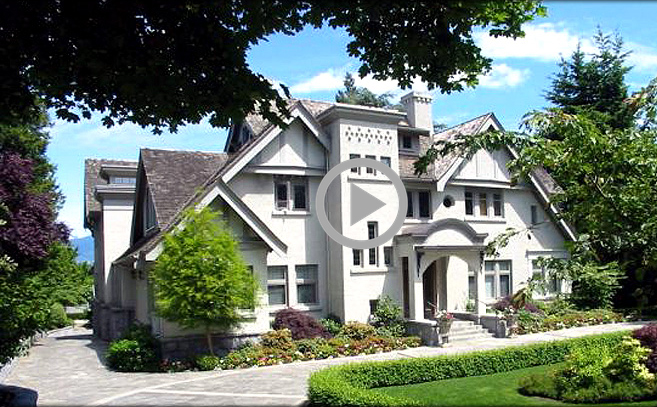
Heritage Many of the homes in First Shaughnessy were designed by the city's leading architects including Maclure & Fox, Parr & Fee, Sharp & Thompson, and Thomas Hooper. The architectural styles used during this period range from English Arts and Crafts and Tudor Revival to Craftsman and Colonial Revival.
Hycroft, 1489 McRae Avenue
This unusual 1910 home features a pair of twin towers with dome roofs on either side of the grand entrance porch, and an outstanding wrought iron fence imported from Glasgow. In 1992, owner Elizabeth Wlosinski willed the home to the City. It is now the home of Canuck Place, a hospice for children. | ||||||||||||||||
| ||||||||||||||||
|
Click Here To Print Pictures 6 Per Page |
Les & Sonja's Main Website | Shaughnessy
Community Website | 02/04/08 - Vancouver Courier - Politician turned developer touts rowhousing scheme |
||||||||||||||||
E-mail Les' Team Include BUILDING NAME/ADDRESS, and any additional info necessary. |
||||||||||||||||
| ||||||||||||||||
Copyright © 2001 Les Twarog. All rights reserved. Disclaimer |
||||||||||||||||